What are subdomain?
What are subdomains?
 Subdomains are the part of a domain that comes before the main domain name and domain extension. They can help you organize your website. For example, trend.bloom.tech. In this URL, trend is the subdomain.
In this article, we’ll answer the question in more detail, explain why subdomains are helpful, and tell you how to create your own subdomains.
Let’s dig in…
Let us examine the URL of bloom.
https://bloom.tech/
This URL contains two parts:
- A protocol (https:) is a set of guidelines that a browser follows to send a request to the server.
- The domain, bloom.tech, or URL to the main website. A domain consists of two parts:
- the TLD (top level domain) which is the .com part (or another domain extension),
- and the SLD (second level domain), themeisle, the name that you buy from a domain registrar.
What is a subdomain used for?
 A subdomain is commonly used to logically separate a website into sections. You can use a subdomain to launch a career site (careers.yoursite.com), a forum (forum.yoursite.com) or for customer support (support.yoursite.com). You may use subdomains to create blogs of different themes too.
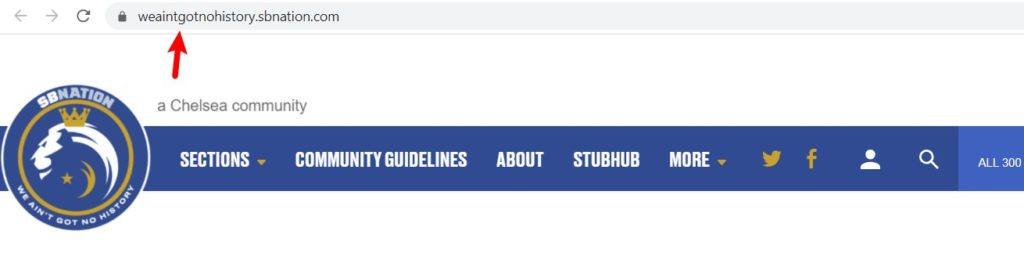
 For instance, Msbnation.com is a sports news blog. However, it uses blogs like weaintgotnohistory.sbnation.com and theshortfuse.sbnation.com for specific teams on different subdomains.
 Some other uses of subdomains are:
- Create different language versions of a website (en.yoursite.com).
- Create a mobile version of a website (m.yoursite.com).
- Set up a network of unrelated sites. For example, how you can sign up for a WordPress.com account and create your own blog on a subdomain (yourblog.wordpress.com).
For example, if you have a personal portfolio site, you could host your contact form at hireme.yourname.com.
How to create a subdomain
Before you can set up any subdomain, you have to have a main domain. If you don’t have that taken care of yet, here are our guides on choosing a domain name and how to register a domain name.Once you buy a domain, you also buy the rights for subdomains within it. Broadly, these are the steps that you must follow to create a subdomain:
- Come up with the name of the subdomain, enter it as a record in your DNS settings.
- Redirect to the server that hosts your subdomain.
Most hosts give you user-friendly tools to help you accomplish this.
While the actual usage may vary slightly based on your host or registrar, here are the how-to guides to creating subdomains for the most popular registrars and web hosts.
Disclaimer: All images present on this blog have their copyrights,prime blog dont own the images and only used the images for teaching purposes.


Comments
Well ,i don't really know.I have never used Google domains and hosting services before but you can sure search it out
Post a Comment
Please comment,it helps build interaction